
















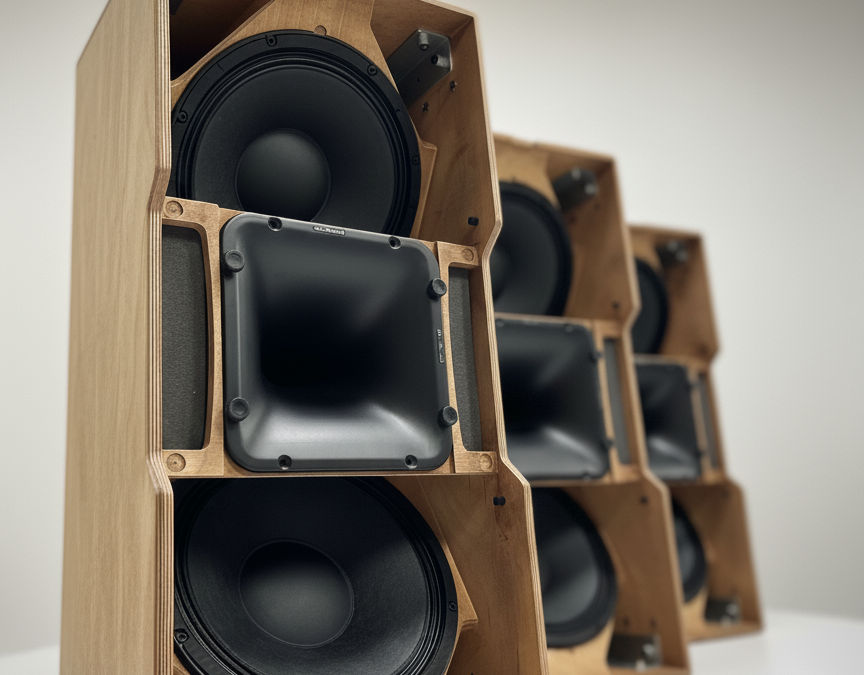
The coaxial design has proven to be one of the most effective solutions in the history of professional sound reinforcement. Its core technical principle is quite straightforward: to ensure that the different pathways of a loudspeaker (the low and high frequencies) all radiate from the same physical point, thus achieving uniform coverage and a consistent phase response. This arrangement, simple in concept but complex to execute, has fundamentally changed our understanding of acoustic precision and spatial coherence in sound systems.
Origin and development
The initial coaxial systems were introduced for a very practical purpose: to minimise the overall footprint of the equipment and to improve temporal alignment in near-field working environments, such as stage monitoring or recording studios. By emitting all frequencies from a single acoustic axis, the classic phase cancellation issues associated with separate transducers were entirely avoided.
However, the initial designs weren’t without their technical snags. The vibration from the woofer often interfered with the tweeter’s performance, and integrating the high-frequency driver within the cone necessitated very precise waveguide solutions to properly control dispersion and head off unwanted resonances. Overcoming these initial hurdles was the driving force behind the new engineering techniques that ultimately heralded the maturity of the coaxial design.
From trial and error to pinpoint accuracy
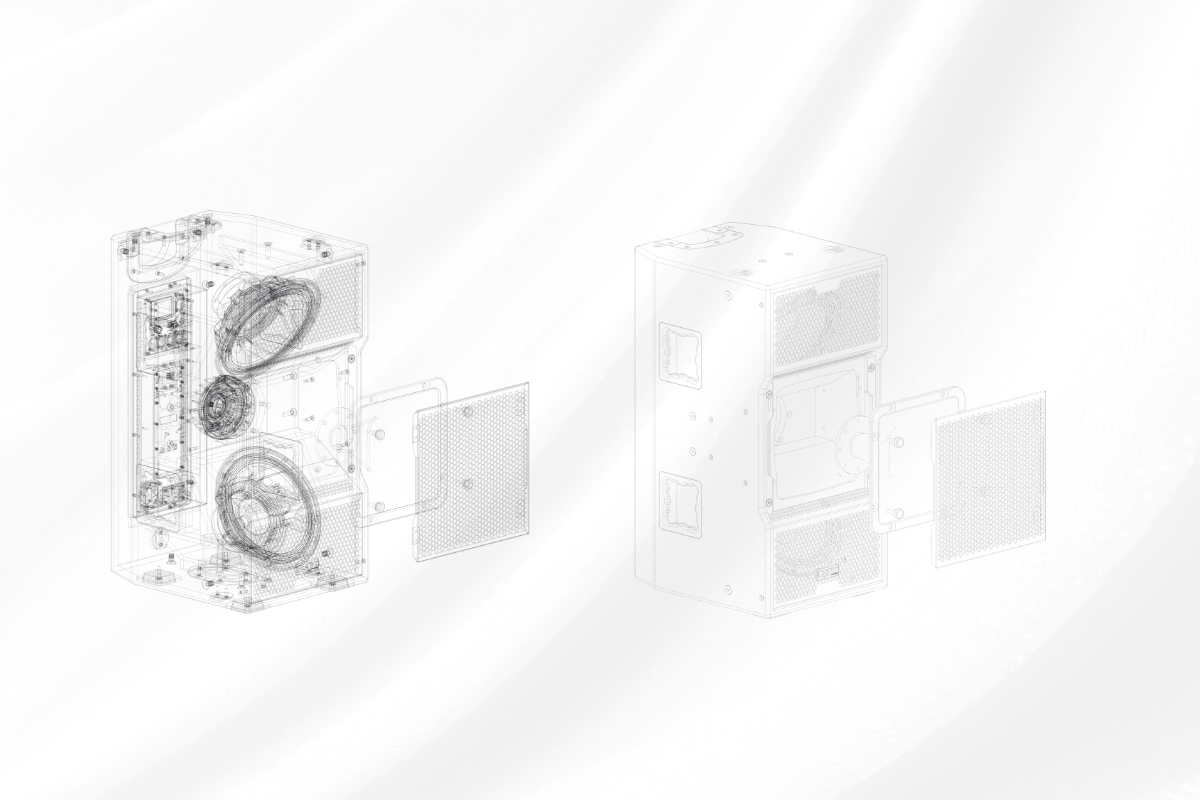
The real step change arrived with the introduction of advanced materials, sophisticated acoustic modelling, and highly optimised compression drivers. These enhancements allowed engineers to fully capitalise on the inherent advantages of this configuration, which include:
- True point source radiation: The entire audio spectrum emanates from a single point, maintaining superb spatial coherence no matter the listener’s position.
- Precise temporal alignment: All frequency waves reach the listener simultaneously, completely eliminating phase irregularities and improving the transient response.
- Symmetrical coverage: The carefully controlled dispersion pattern drastically reduces ‘dead zones’ and overlap issues.
- Compact and neat design: Perfect for installations where space is at a premium or where aesthetic integration is a crucial consideration.
These capabilities have firmly established coaxial systems as a must-have tool in theatres, night clubs, places of worship, fixed installations, and on-stage monitoring anywhere clarity and consistent sound quality are non-negotiable.
The current outlook
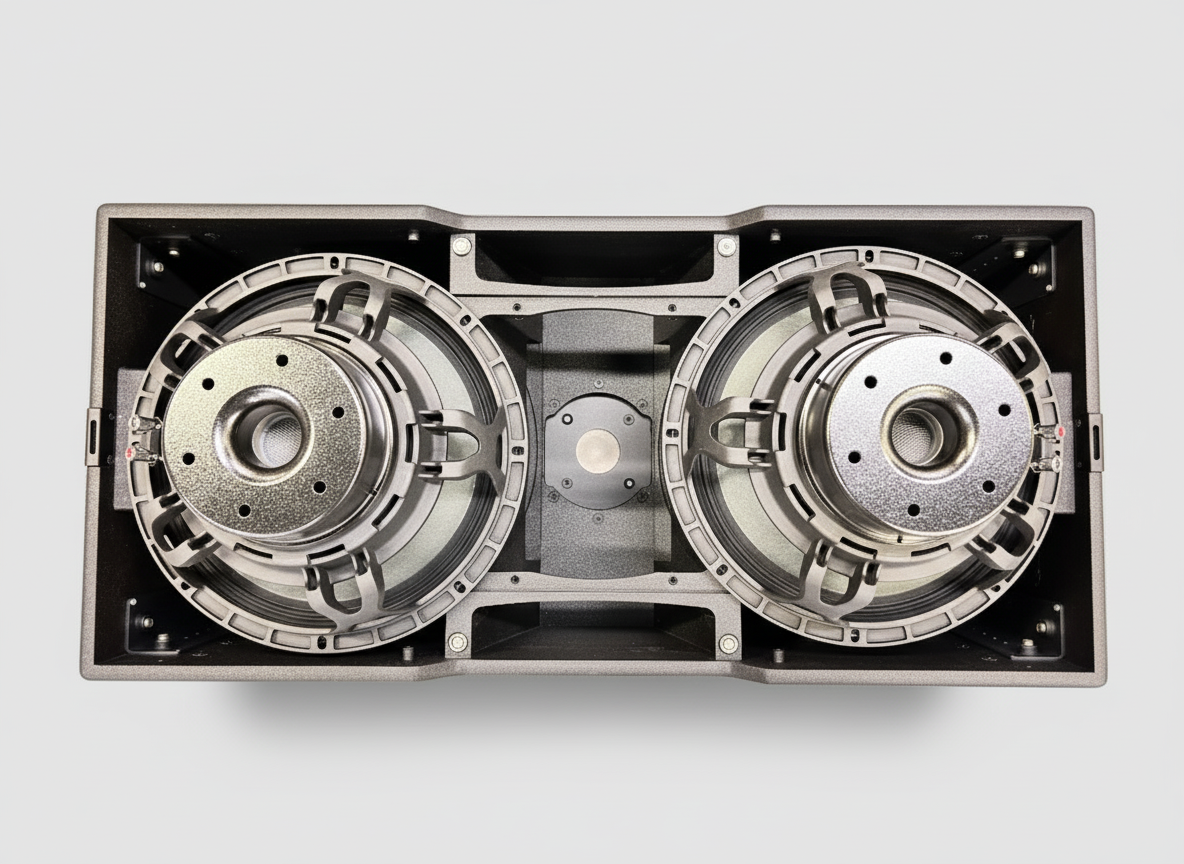
The coaxial design has evolved from being simply a technical alternative to becoming a recognised industry standard for applications demanding clarity, coherence, and uniform coverage. Its unparalleled ability to deliver an accurate sonic image and a natural response ensures its continued relevance in both compact sound reinforcement setups and high-end fixed installations.
At Lynx Pro Audio, we apply this technology by combining acoustic design and local manufacturing to develop reliable, coherent systems that deliver precise and stable sound in any environment.