The evolution of coaxial design

The evolution of coaxial design

The coaxial design has proven to be one of the most effective solutions in the history of professional sound reinforcement. Its core technical principle is quite straightforward: to ensure that the different pathways of a loudspeaker (the low and high frequencies) all radiate from the same physical point, thus achieving uniform coverage and a consistent phase response. This arrangement, simple in concept but complex to execute, has fundamentally changed our understanding of acoustic precision and spatial coherence in sound systems.

Origin and development

The initial coaxial systems were introduced for a very practical purpose: to minimise the overall footprint of the equipment and to improve temporal alignment in near-field working environments, such as stage monitoring or recording studios. By emitting all frequencies from a single acoustic axis, the classic phase cancellation issues associated with separate transducers were entirely avoided.

However, the initial designs weren’t without their technical snags. The vibration from the woofer often interfered with the tweeter’s performance, and integrating the high-frequency driver within the cone necessitated very precise waveguide solutions to properly control dispersion and head off unwanted resonances. Overcoming these initial hurdles was the driving force behind the new engineering techniques that ultimately heralded the maturity of the coaxial design.

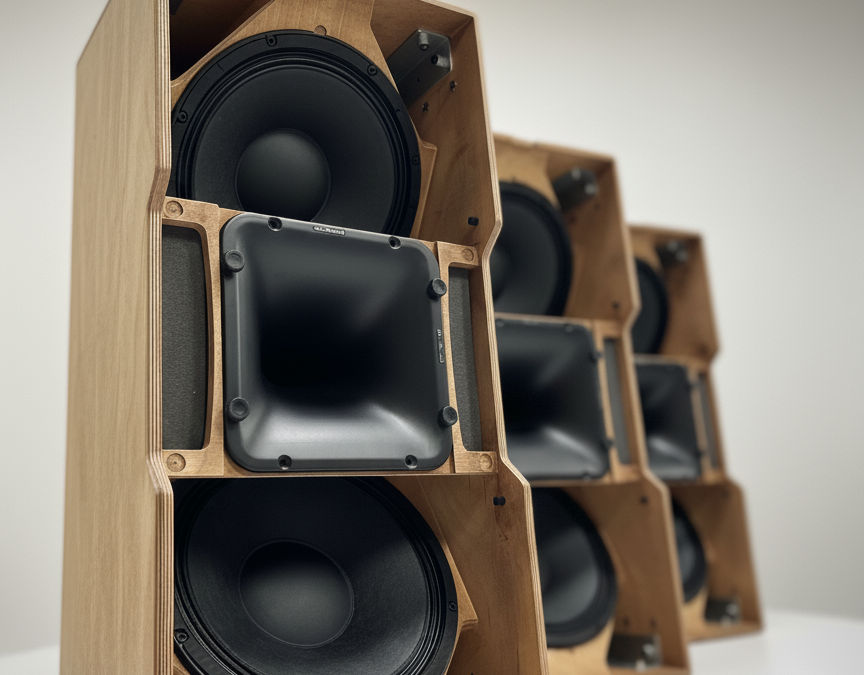
CPs-210 esbozo de Lynx Pro Audio

From trial and error to pinpoint accuracy

The real step change arrived with the introduction of advanced materials, sophisticated acoustic modelling, and highly optimised compression drivers. These enhancements allowed engineers to fully capitalise on the inherent advantages of this configuration, which include:

    • True point source radiation: The entire audio spectrum emanates from a single point, maintaining superb spatial coherence no matter the listener’s position.
    • Precise temporal alignment: All frequency waves reach the listener simultaneously, completely eliminating phase irregularities and improving the transient response.
    • Symmetrical coverage: The carefully controlled dispersion pattern drastically reduces ‘dead zones’ and overlap issues.
    • Compact and neat design: Perfect for installations where space is at a premium or where aesthetic integration is a crucial consideration.

These capabilities have firmly established coaxial systems as a must-have tool in theatres, night clubs, places of worship, fixed installations, and on-stage monitoring anywhere clarity and consistent sound quality are non-negotiable.

Coherence, dependability, and control

Today, the coaxial design benefits enormously from the leaps made in digital signal processing (DSP). The use of DSP with FIR filters allows for minute adjustments to phase, frequency response, and dispersion, maintaining absolute coherence even within highly complex systems.

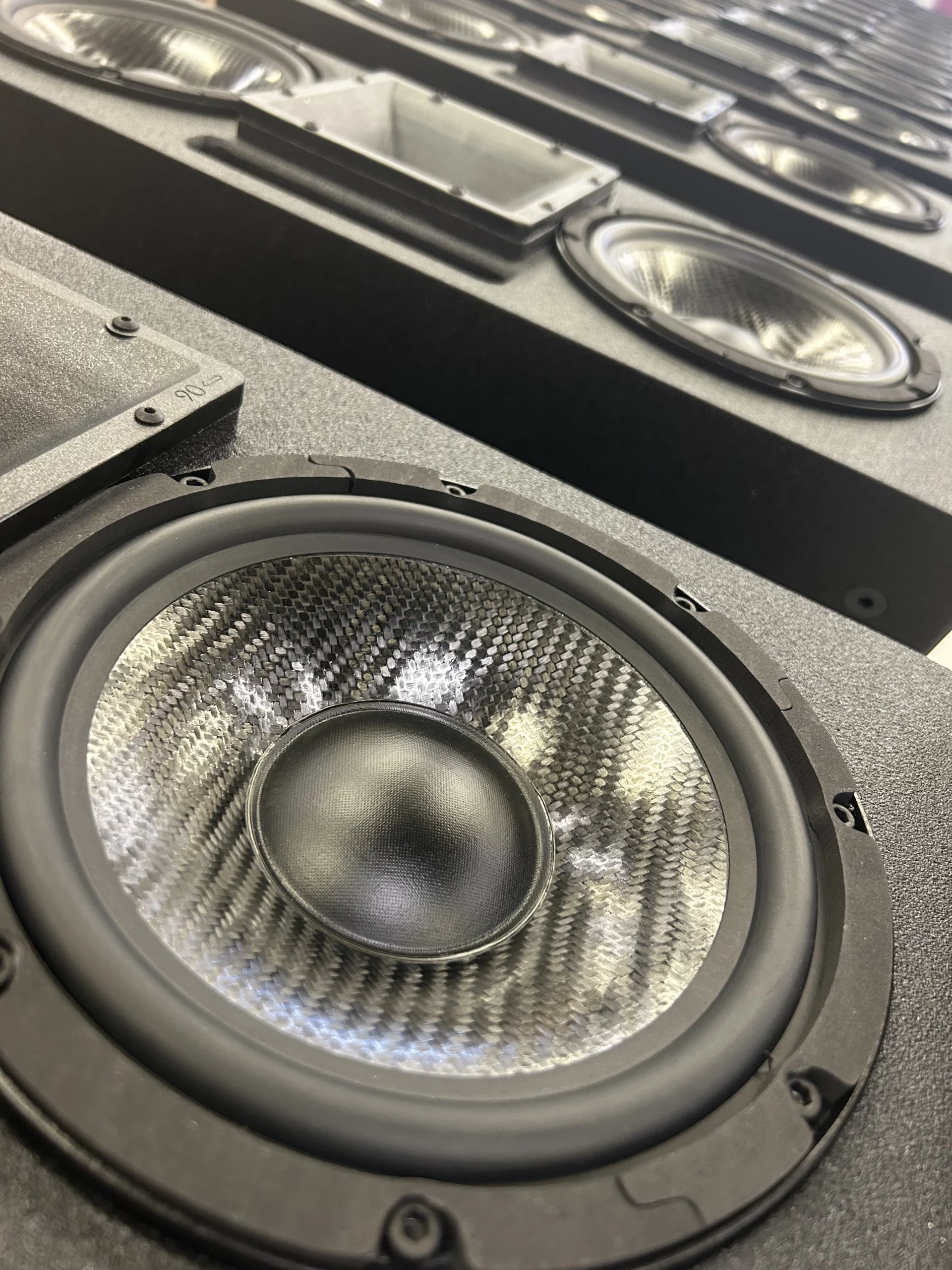
The CPS series from Lynx Pro Audio serves as a prime example of this evolution. Their design couples high-performance components with a mechanically robust structure and highly refined acoustic control, striking an enviable balance between mechanical reliability and sonic precision. These products are developed with the explicit goal of delivering a coherent, controlled, and utterly stable response in all professional settings.

CPS-inside

The current outlook

The coaxial design has evolved from being simply a technical alternative to becoming a recognised industry standard for applications demanding clarity, coherence, and uniform coverage. Its unparalleled ability to deliver an accurate sonic image and a natural response ensures its continued relevance in both compact sound reinforcement setups and high-end fixed installations.

At Lynx Pro Audio, we apply this technology by combining acoustic design and local manufacturing to develop reliable, coherent systems that deliver precise and stable sound in any environment.

Lynx Pro Audio joins PAcalculate as official sponsor

Lynx Pro Audio joins PAcalculate as official sponsor

Within the field of acoustic engineering, technical precision forms the basis of every successful sound design. Guided by our “Culture of Sound” philosophy, Lynx Pro Audio is pleased to announce its support as official sponsor of PAcalculate, a widely recognised calculation tool within the professional audio industry.

This collaboration with the Doctor Pro Audio platform aligns with our objective of providing practical resources that streamline the daily workflows of system engineers, installers, and technicians.

Technical utility and core features

PAcalculate is a comprehensive multi-platform application designed to address the mathematical challenges encountered during the design and alignment of sound systems. Its architecture allows for immediate, complex calculations, significantly reducing the margin for error during on-site operations.

Key features integrated within the application include:

  • Sound Pressure Level (SPL) Calculations: Accurate estimations of SPL based on distance and transducer sensitivity.
  • System Alignment: Calculators for delay times and phase adjustments to optimise acoustic coverage.
  • Electrical Utility Tools: Practical applications of Ohm’s Law, cable sizing, and load impedances.
  • Subwoofer Array Simulation: This feature allows for the objective prediction of low-frequency radiation patterns through the digital modelling of multiple configurations.

web Doctor Pro Audio Lynx Pro Audio

A commitment to industry standards

At Lynx Pro Audio, we believe that our responsibility as manufacturers extends beyond the hardware.
Supporting a resource like PAcalculate is a natural extension of our commitment to the technical community. We recognise the importance of independent projects that have provided rigorous, reliable data to the industry for years.

By supporting this tool, we aim to ensure that high-quality technical resources remain accessible to professionals and students worldwide, ultimately raising the standard of live events and fixed installations.

PACalculate Lynx Pro Audio aplicacion tecnica
PACalculate Lynx Pro Audio app

Availability and access

The application is compatible with modern mobile devices and further technical details can be found on the developer’s official site:

Access the tool: PAcalculate at Doctor Pro Audio

With this partnership, Lynx Pro Audio reaffirms its presence within the professional digital ecosystem, prioritising technical transparency and collaboration as drivers for industry growth.

PACalculate Lynx Pro Audio aplicacion tecnica
PACalculate Lynx Pro Audio funcionalidades
Line Array or Point Source: How to choose the right system

Line Array or Point Source: How to choose the right system

In professional sound reinforcement, whether for live events or fixed installations, two system configurations dominate the field: line array systems and point source systems. Both approaches have clear advantages, but their effectiveness depends entirely on the acoustic context and the correct application of design criteria.

What is a Point Source System?

A point source system radiates sound from a single point, creating a spherical dispersion pattern. This natural propagation can be beneficial or limiting, depending on the space and the required coverage.

Point source cabinets are particularly effective at short to medium distances, where controlled coverage is less critical and a compact, easy-to-deploy solution is required. They are widely used in clubs, small theatres, conference rooms, and corporate events, where precision and sound quality are essential but large-scale coverage is unnecessary.

Technically, point source cabinets tend to be lighter, easier to handle, and deliver a coherent frequency response as long as they are used within their optimal coverage range. In permanent installations, they provide clarity and consistency without the need for complex rigging or acoustic prediction tools.

point source Lynx Pro Audio

What are the advantages of a Line Array?

A line array consists of multiple loudspeakers arranged vertically, designed to work together as a single coherent source, creating a cylindrical dispersion pattern. This configuration allows precise control of vertical dispersion, delivering consistent SPL and intelligibility over long distances.

Line arrays excel in large venues, outdoor concerts, stadiums, auditoriums, and festivals, environments where sound must cover hundreds of meters and reach thousands of listeners. With proper design, they minimize unwanted reflections, extend coverage uniformly, and control SPL attenuation in far-field zones.

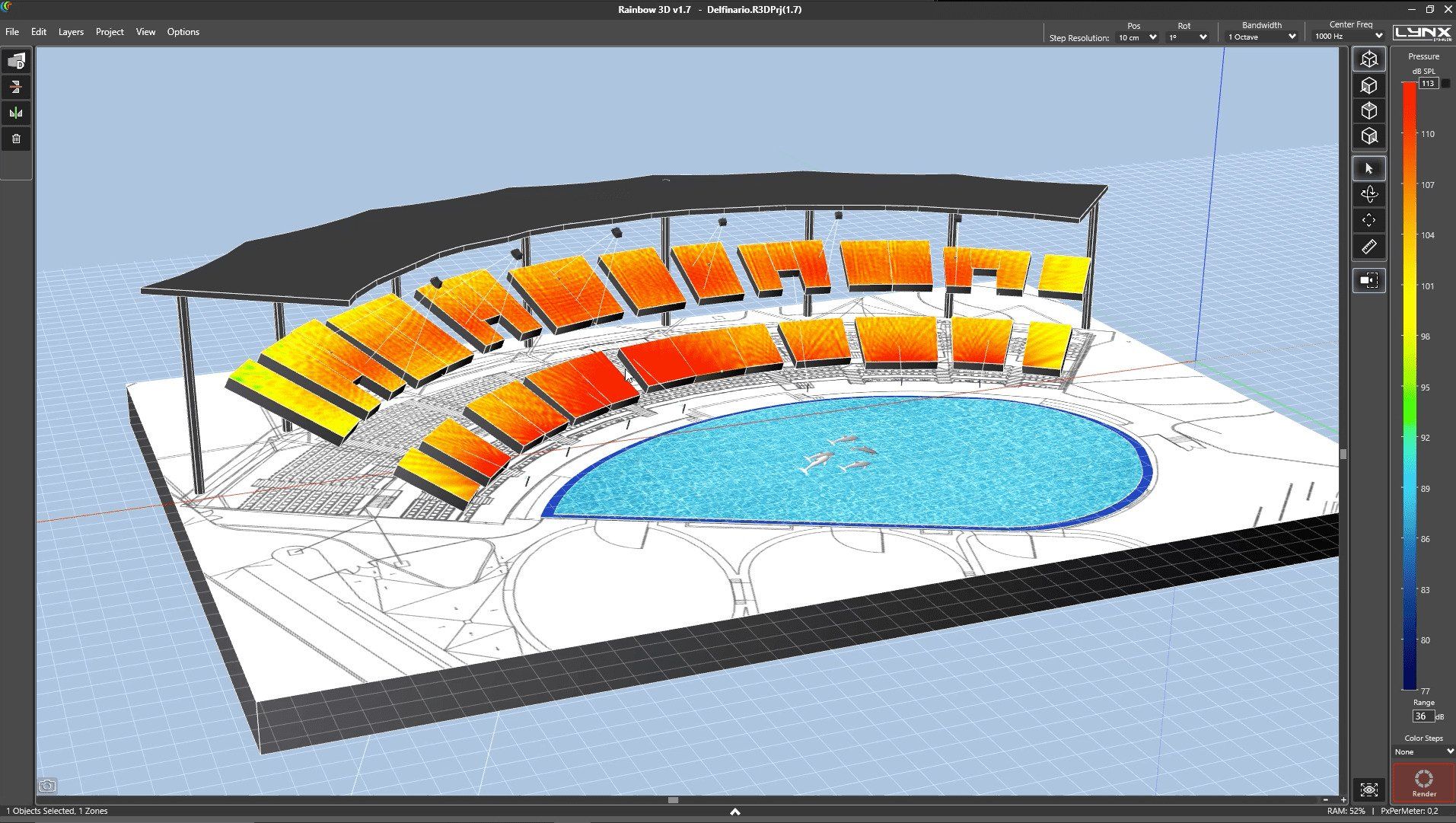
However, line arrays require meticulous planning, Rainbow 3D acoustic prediction software, and accurate rigging systems to perform correctly.

The new LAIA series from Lynx Pro Audio represents a significant step forward in line array design. With integrated Rainbow 3D, our acoustic prediction software, optimized rigging, advanced DSP, and coherent response across large venues, LAIA provides scalability, precision, and reliability for demanding sound reinforcement applications.

cls-series-family-picture

Choosing the right system

The decision between line array and point source is not about which is “better,” but about which is better suited to the application.

Point source systems excel in smaller or medium-sized spaces where simplicity, portability, and high-quality sound are the priority.

Line arrays dominate in large-scale environments thanks to their extended reach, controlled dispersion, and intelligibility at distance.

Both are essential tools in professional audio, and each achieves optimal results when applied with a clear understanding of the acoustic environment and system design objectives.

DSP Technology: The core of Lynx Pro Audio

DSP Technology: The core of Lynx Pro Audio

DSPB-FL by Lynx Pro Audio: Professional Digital Signal Processing

In professional audio, the performance of a self-powered system isn’t defined solely by amplifier power or acoustic design. The real game-changer is digital signal processing (DSP), which shapes how every frequency is managed and optimised for the environment. At Lynx Pro Audio, this role is fulfilled by the DSPB-FL – a fully in-house architecture developed at our Valencia headquarters, designed to deliver accuracy, versatility and rock-solid reliability in the most demanding professional audio applications.

Digital Signal Processing

The DSPB-FL is purpose-built to manage complex configurations with high-resolution, low-latency processing, ensuring absolute accuracy and consistency at every stage. Its key technical highlights include:

  • 96 kHz 32-bit sampling frequency and double precision processing, ensuring detailed and natural reproduction of the entire sound spectrum.

  • Linear-phase FIR filters, crucial for preserving phase coherence and achieving uniform response in distributed systems and line arrays.

  • 32-bit AD/DA converters, providing an extended dynamic range with exceptionally low distortion.

  • Capacity for user memories with active crossovers, delay, gain and up to 10 parametric filters per channel simultaneously.

  • Customisable memories, enabling complete presets for gain, delay, crossovers, and parametric filters, making system setup fast and adaptable to any environment or operational need.

With these features, the DSPB-FL stands out as the perfect solution for both fixed installations and touring applications, where precision and consistency are absolutely critical.

DSP Technology by Lynx Pro Audio

System control and configuration

The DSPB-FL offers a range of control and configuration options:

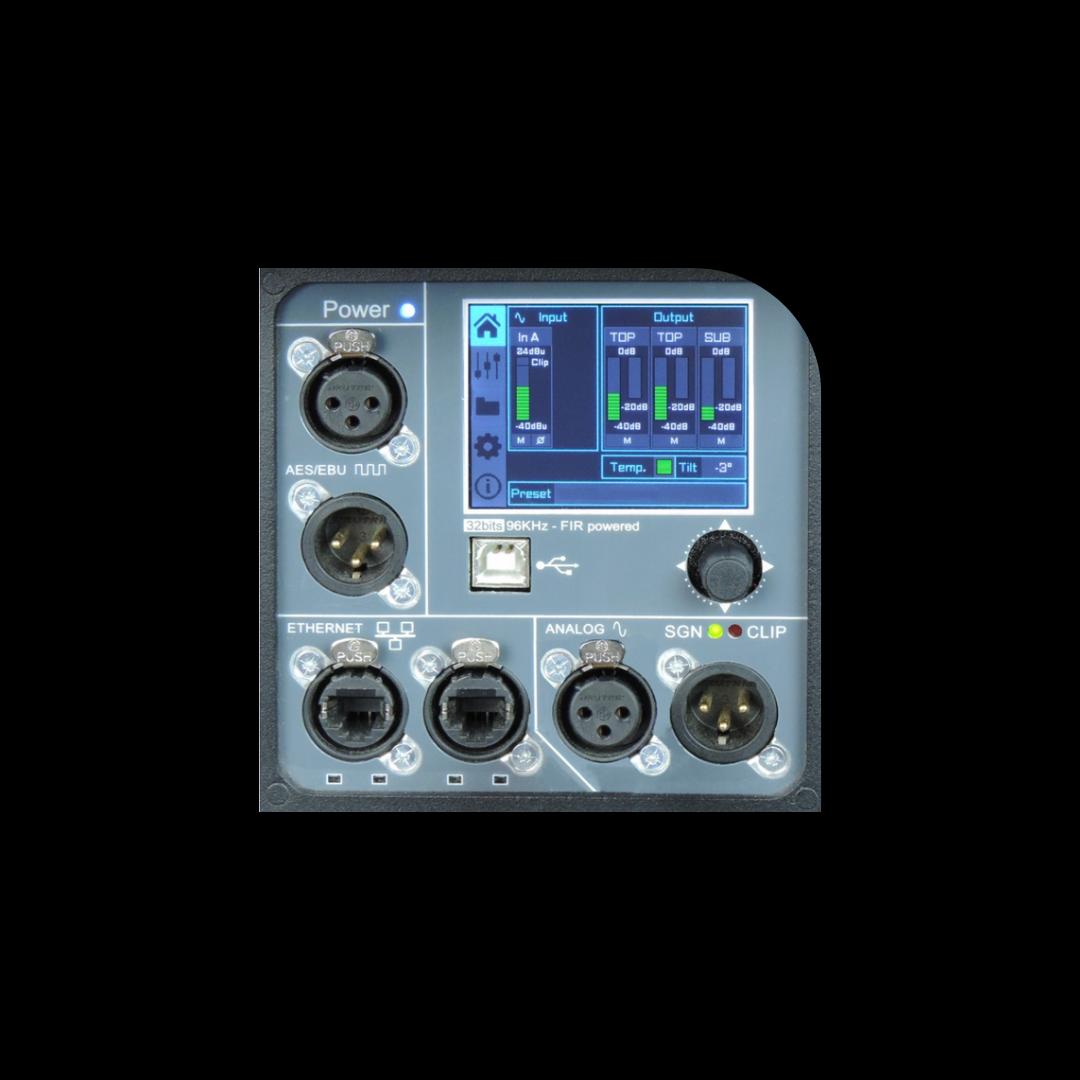
    • User Interface: Features a 2.8” IPS display and multifunction joystick, allowing direct adjustment of gain, delay, and basic crossover settings right from the unit.

    • Custom Memories: Up to five memory slots can be configured to store specific settings, enabling rapid adaptation to different venues or scenarios.

    • Professional Connectivity: Equipped with XLR analogue inputs, AES3 digital inputs, and Ethernet for remote control and real-time monitoring.

    • OCS Control Software: The Online Control System (OCS) enables management of multiple units, global adjustments, and remote diagnostics with ease.

In-House development and reliability

Fully developed by Lynx Pro Audio, the DSPB-FL ensures:

  • Seamless integration with self-powered systems, maximising both stability and performance.

  • Technological independence, with functionalities that can be adapted and enhanced to meet the demands of each installation or user.

  • Expert technical support, offering direct assistance and updates grounded in comprehensive knowledge of the platform.

A trusted tool in professional audio, the DSPB-FL combines precision, flexibility, and reliability. Its in-house architecture guarantees phase coherence, complete signal control, and consistent performance, making it the benchmark for self-powered systems in auditoriums, tours, sports venues, and any professional environment where high-quality sound is essential.

Watch this tutorial to understand how it works.

The anechoic chamber in the development of professional loudspeakers

The anechoic chamber in the development of professional loudspeakers

In professional loudspeaker design, precision is essential. Critical parameters such as frequency response, distortion, and directivity must be measured under ideal conditions to ensure the system’s acoustic performance aligns precisely with its physical design. This requires a controlled, interference-free environment, making the anechoic chamber an indispensable tool in advanced acoustic R&D.

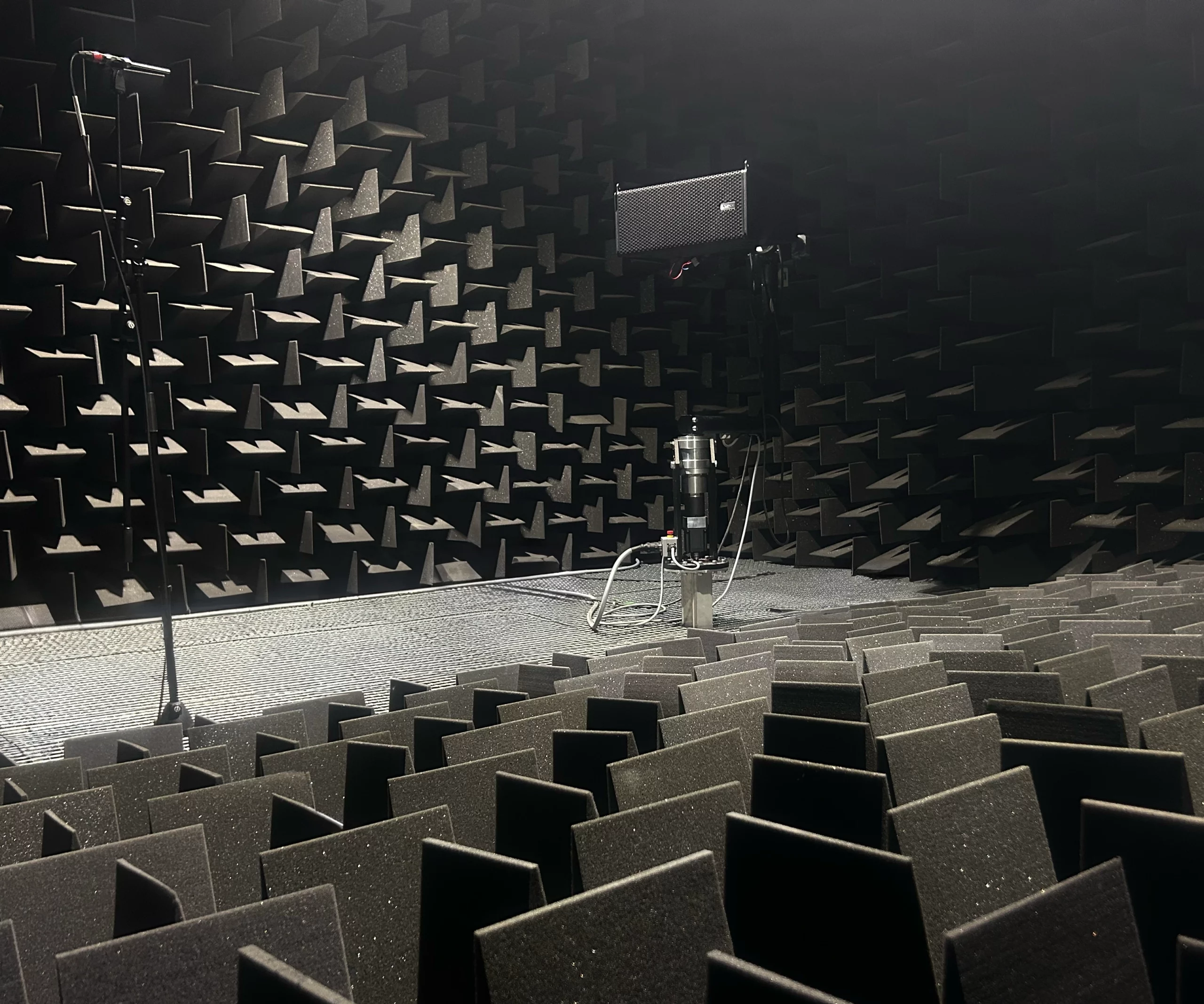
Cámara-anecóica-Lynx Pro Audio

At Lynx Pro Audio, our anechoic chamber plays a vital role in the development of all sound systems, from initial prototypes to final products. By simulating a reflection-free space, it reveals the loudspeaker’s true acoustic behavior, free from the artifacts introduced by typical room acoustics.

This setup allows us to meticulously analyze key acoustic parameters, including frequency response, sensitivity, on-axis and off-axis behavior, horizontal and vertical dispersion, and overall system efficiency at realistic sound pressure levels. Such data is critical for optimizing both the physical loudspeaker design and its associated digital signal processing (DSP), ensuring each system delivers consistent and predictable performance.

Our in-house anechoic chamber supports accurate free-field measurements starting from 100 Hz, comfortably covering the most relevant frequency range for Lynx Pro Audio systems.

A cornerstone of this facility is our automated robotic measurement system, a computer-controlled 3D arm capable of rotating the loudspeaker across multiple axes. This precision motion enables full 360° polar data acquisition, commonly known as balloon measurements, which are essential for visualizing each model’s acoustic dispersion.

The measurement microphone is positioned with high accuracy using a guided mechanical system, ensuring precise and repeatable placement at every angle. This level of control is crucial for achieving consistent, reproducible measurements across multiple prototypes or test sessions.

All measurement data is seamlessly integrated into our proprietary Rainbow 3D electroacoustic prediction software. By incorporating real-world data from the anechoic chamber, Rainbow 3D can simulate loudspeaker performance in actual venues whether theaters, multipurpose halls, or open outdoor spaces. This alignment between measured and predicted performance provides installers and engineers with the confidence and reliability they need throughout the entire project lifecycle, from system design to final installation.

Having our own anechoic chamber significantly accelerates product development while reducing reliance on external laboratories. This agility enhances everything from validating new designs and calibrating DSP presets to comparing different system configurations. It is particularly beneficial for outdoor applications like line array systems, where control, predictability, and coverage consistency are critical.

Cámara anecoica Lynx Pro Audio

Ultimately, this in-house measurement capability ensures that the technical specifications we publish, accurately reflect each loudspeaker’s real-world performance under standardized conditions.

Lynx Pro Audio logo
Privacy Policy

This website uses cookies so that we can offer you the best user experience possible. Cookie information is stored in your browser and performs functions such as recognizing you when you return to our website or helping our team understand which sections of the website you find most interesting and useful.

Read more about our Privacy Policy.